
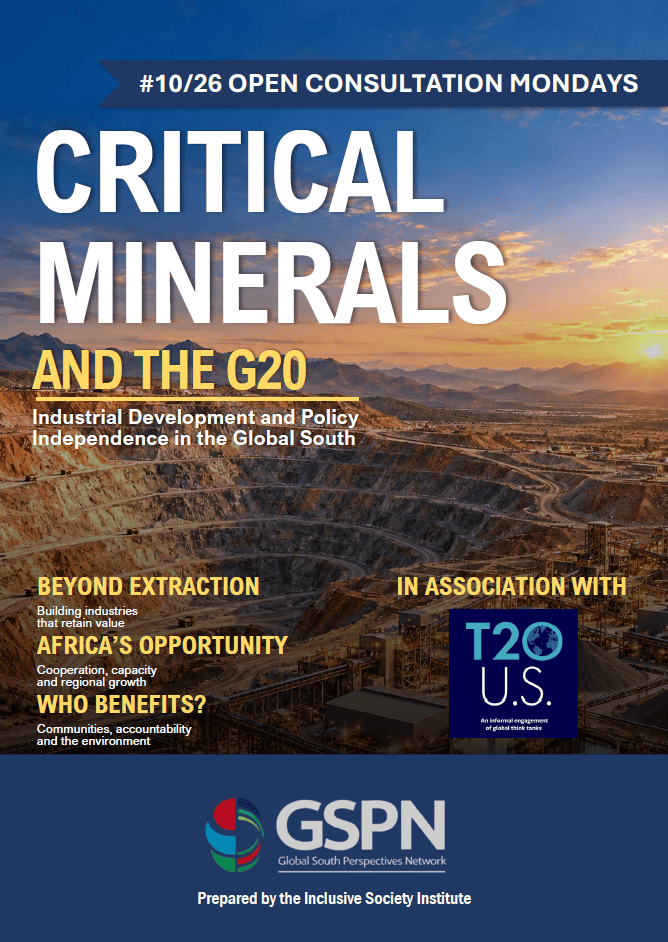
#10 OPEN CONSULTATION MONDAYS, 12 OCTOBER 2026
The Global South Perspectives Network’s Open Consultation Mondays session on 12 October 2026 examined how mineral-producing countries could use rising demand for critical minerals to build competitive industries and retain control over their development choices. Competition among the United States, China and the European Union gives producers leverage to negotiate investment in processing, infrastructure and skills. Exclusive supply agreements, however, can tie countries to particular buyers and restrict future partnerships. Technological change can also erode bargaining power by reducing demand for specific minerals.
The report argues that beneficiation, or adding value through further processing, can create jobs, build technical expertise and open opportunities for local suppliers. Export bans, tariffs and local processing requirements can influence investment decisions, but viable projects depend on reliable, affordable electricity, efficient transport, finance, skills and consistent regulation. Policies should reflect the commercial and technical requirements of each mineral.
African cooperation could strengthen bargaining power and make regional production more viable. Countries could combine mineral deposits, infrastructure and industrial expertise across borders, with agreements that distribute benefits fairly. South Africa could contribute engineering expertise and established industrial capabilities, although high electricity costs, logistics problems and policy uncertainty limit its ability to serve as a dependable processing partner. Regional supply chains could also support manufacturing for African markets.
The consultation proposed sharing geological data and market intelligence, pooling legal and technical expertise, and developing model contract provisions so governments can assess offers and negotiate enforceable commitments. The G20, T20 and United Nations could convene producers and consumers, while a possible agreement among interested World Trade Organization members could clarify the scope for industrial policy. Participants also considered how international cooperation might help producers manage price volatility and changing demand.
The report calls for affected communities to have a formal role in decisions alongside government, industry and civil society, backed by monitoring and credible grievance mechanisms. It also stresses enforcement of environmental rules and examines whether industry contributions could help cover damage when companies cannot meet the full cost. The report judges success by whether mineral development leaves behind viable industries, better employment opportunities and improved living conditions in communities that bear the costs of extraction and processing.
* This is a summary of the GSPN Open Consultation Mondays meeting held on 12 October 2026. The full report can be accessed here.


Leave a Reply